
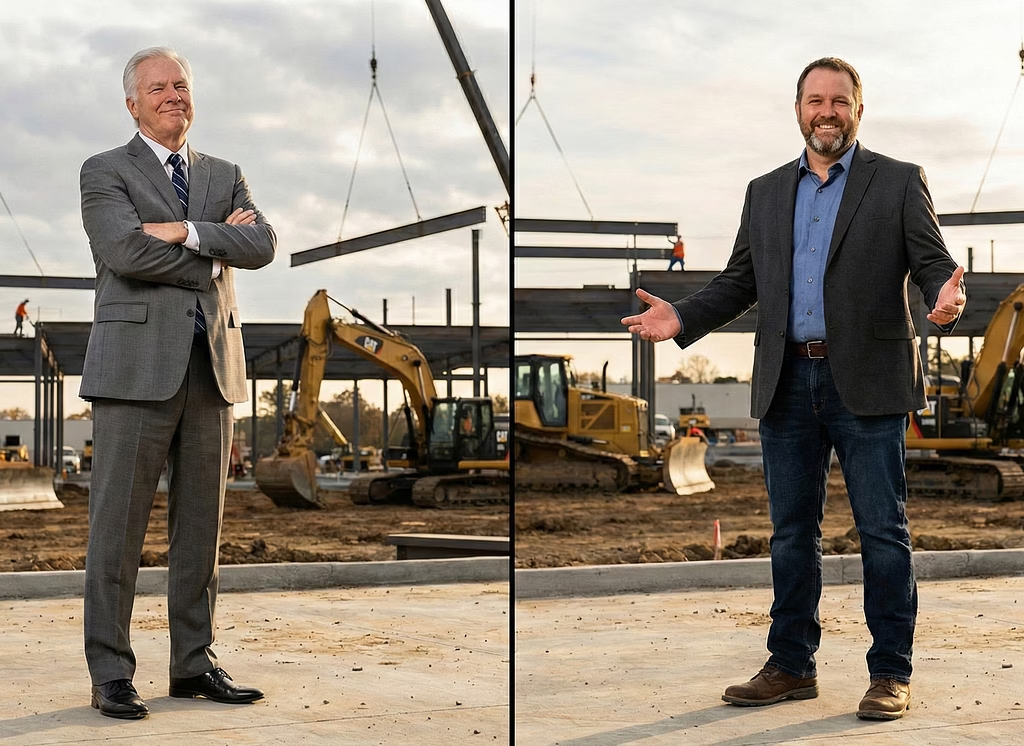
Construction leaders view the consultant versus fractional CMO decision as a choice between two equals. The actual decision is about whether you’re serious about making changes to your marketing or just checking a box. One delivers a plan. The other builds the system that makes the plan work.
The Consultant Model Collapses at Implementation
Marketing consultants stay surface level. They don’t have time to understand the nuances of your services. They interview executives and survey prospects. They deliver a strategy document. Then they leave.
Here’s what happens next: nothing.
A general contractor in Utah paid $25,000 for an outreach campaign strategy. The operations team killed it immediately. They knew it wouldn’t work with their client base. The consultant never spoke to operations. They talked to the wrong people and built a strategy on faulty assumptions.
Strategy without adaptation is a blueprint that ignores soil conditions. Consultants hand you plans, while Fractional CMOs stay on-site through construction. The difference shows up the moment you start building.
You’re Hiring Someone to Talk to the Wrong People
Consultants build strategies by interviewing executives and surveying prospects that aren’t a good fit. They miss the operational reality that determines whether a campaign succeeds or fails.
I talk to operations about the easiest clients to service. Who they enjoy working with. What clients “get it.” That conversation starts the Ideal Client Profile. Operations knows which campaigns will break before marketing ever launches them.
A fractional CMO can get granular feedback beyond metrics on a dashboard. I talk to sales about their conversations with prospects. We adjust, pivot, or kill campaigns based on what’s actually happening in the market.
Real market intelligence comes from sales conversations, not survey data.
The Market Shifts and Your Strategy Becomes Obsolete
These are conversations I’ve had with my clients’ sales teams:
- Developers started asking about design-assist projects to reduce supply chain issues.
- A trade contractor heard GCs requesting different building materials to value-engineer and compete more effectively.
- A ConTech company discovered scheduling was a bigger hot button than tracking RFIs.
Three different pivots from three different conversations. A consultant delivers a strategy focused on one problem and leaves. Three months later, the market has moved. You paid for a strategy that targets the wrong pain point. You have no one to tell you it’s broken.
Companies that can’t pivot feel like they wasted their money. They discredit the impact of marketing entirely. The consultant is gone. The strategy sits unused. The team loses morale.
What You’re Actually Avoiding
Construction companies hire consultants instead of fractional CMOs for three reasons:
- They don’t want the commitment.
- They want to try before buying.
- They don’t know fractional CMOs exist for construction marketing. [Ouch!]
The cost of commitment avoidance exceeds the cost of a failed strategy. Marketing teams lose morale while the consultant’s plan sits unused. They feel like the budget was wasted. They begin to believe they know more than the external expert. They’re often right.
When I come in as a fractional CMO after a consultant has already delivered a strategy, the first thing I fix isn’t the strategy itself. I tell the marketing team I’m on their team. I’m here to help them grow, get their ideas approved, and have a voice. I’m a team leader and mentor.
You have to rebuild trust with a team that’s been ignored.
Consultants Give Roadmaps But Won’t Learn the Way
Consultants are good for second opinions.
They work when you have a strong marketing director who can implement the strategy independently. They deliver value when you need a specific process built and have the internal capacity to execute it.
Fractional CMOs provide ongoing guidance.
We help you pivot when campaigns aren’t performing. We serve as a sounding board for new ideas. We talk to operations, sales, and marketing to understand what’s actually working.
The sounding board function isn’t a luxury feature. It’s the difference between rigid plans that crack under pressure and adaptive systems that hold. Markets shift. Client needs evolve. Competitive dynamics change. A strategy that can’t adapt becomes obsolete the moment conditions change.
Consultants can give you a roadmap. They won’t learn the way with you.
The Question That Reveals Everything
When a construction company asks whether they need a consultant or a fractional CMO, I ask one question: Do you want a plan or a leader?
The answer reveals whether you’re serious about building marketing infrastructure or just want someone to validate what you’re already doing. Check-box marketing produces generic plans that break down when they come into contact with reality. Marketing leadership produces systems that adapt when conditions shift.
Most construction companies avoid this decision by hiring a consultant. They get a plan. They feel good about taking action. The plan sits in a folder. Nothing changes. They blame marketing for failing to deliver results.
The real decision isn’t consultant versus fractional CMO. It’s whether you’re ready to build a marketing infrastructure that adapts to market conditions or just want a document that makes you feel like you tried.
Stop treating marketing like a permit process. You need someone who stays on site through construction, not someone who hands you plans and walks away.
Hire a fractional CMO if you want growth and marketing leadership. Hire a consultant if you have the internal capacity to execute independently but need only strategic direction. But stop pretending they’re equivalent options.
Ask yourself what you actually want, then hire accordingly.