
There’s new research out from STFO that scored 100 B2B SaaS companies on brand distinctiveness across eight different assets including color, logo, typography, taglines, and visual identity systems. 78 companies landed in the generic band, 19 were recognizable, 2 were invisible, and only 1 reached what they called “ownable” status with a score of 19 out of 24.
That’s SaaS and AI companies, categories that are supposedly obsessed with brand, where marketing budgets run into the millions, and every startup has a brand consultant on speed dial.
So when I look at that number and then turn my attention to commercial construction after two decades in this industry, I don’t think we’re sitting at 78 percent generic. I think we’re closer to 99 percent.
The research concluded that if you remove the brand name from most homepages, prospective customers wouldn’t be able to tell the companies apart, and that observation lands even harder in construction where the visual language, the messaging, the portfolio presentation, and the value propositions are so uniform that covering the logo doesn’t just make you anonymous, it makes you interchangeable.
I call it the logo cover test, and it’s the fastest brand audit you’ll ever run. Go to your website right now, cover your company name and logo with your hand, and ask yourself whether anyone scrolling through could identify who built those projects, what you stand for, or who you’re actually for.
If the answer is no, you don’t have a brand problem. You have an identity crisis that’s hiding in plain sight.
When I started in construction two decades ago, most contractors ran the same tagline: “On Time, On Budget.” We’ve evolved since then, but the evolution has been lateral rather than vertical.
The taglines now focus on capability or a generic reassurance, and the portfolios still feature dozens of pictures of completed projects rather than people working. If you hide the logo on 99 percent of construction websites, you couldn’t identify most of them, and that’s not because contractors lack identity. It’s because they’re actively hiding it.
The Generalist Trap: How Playing It Safe Engineers the Race to the Bottom
Most contractors are generalists, so they fear picking a lane and alienating someone.
The logic feels airtight when you’re sitting in the office trying to make payroll: staying broad means more opportunities, more bids, more chances to win work. But what actually happens when you refuse to niche down is that you engineer yourself into the most financially dangerous position possible.
You compete on price because you’ve given buyers no other way to compare you, and you’re still trying to attract top talent, which costs real money, so the margin gets crushed from both ends. Research on commoditization shows that in commoditized markets, companies compete on price, contributing to a race to the bottom in which the inevitable outcome is margin compression and lower profit per sale. That’s not a hypothetical future state for construction. That’s the present reality for the 99 percent who’ve chosen to stay generic.
The math looks terrifying when you first consider niching down because you’re going from a total addressable market of millions to hundreds, but that’s the entire point. You’re not shrinking your market. You’re finally becoming visible to the right part of it.
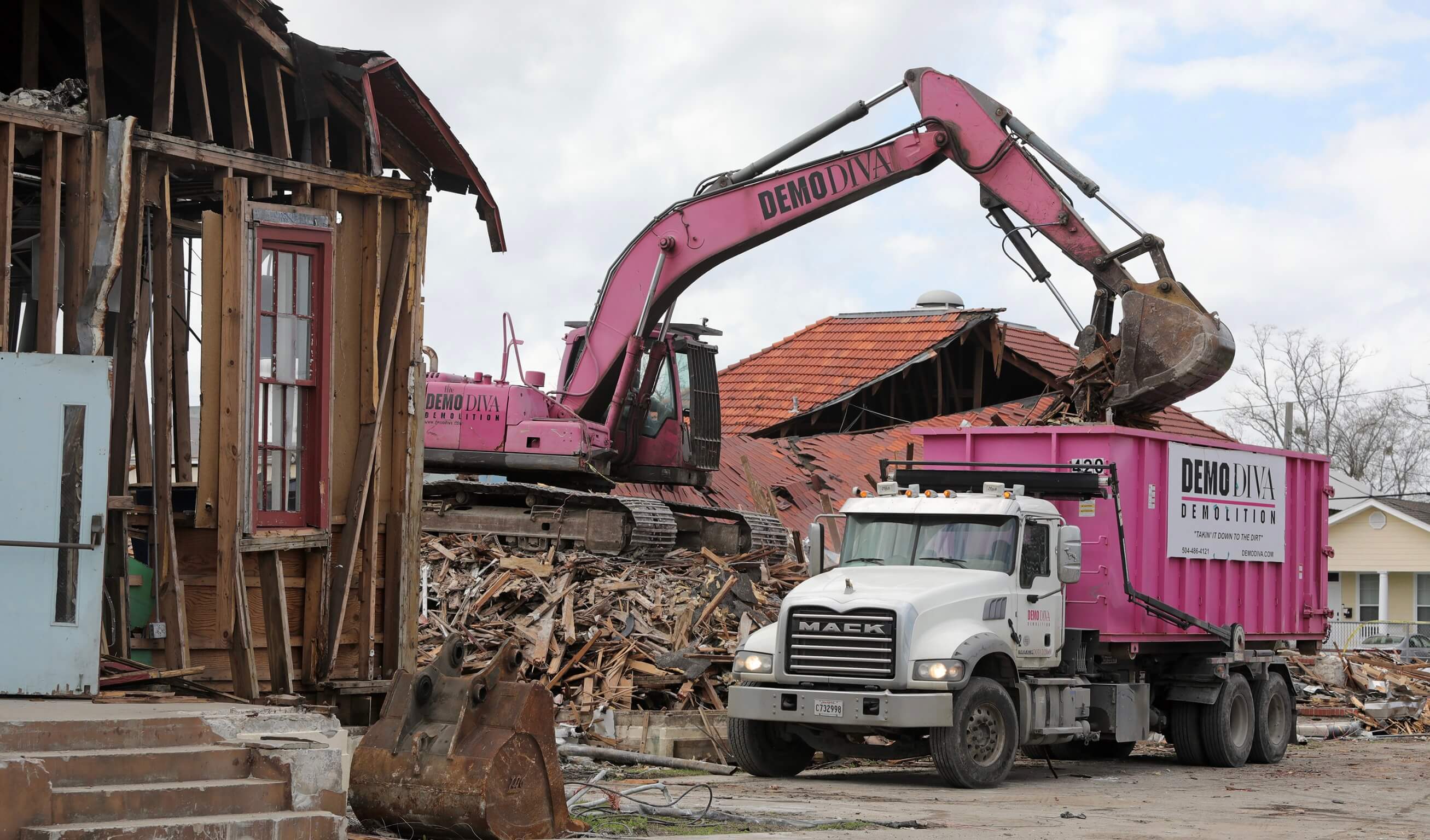
The contractor that niches down to three markets looks like they’re playing smaller, but they’re actually the only one who shows up as the obvious choice when a buyer in that niche is looking, and everyone else becomes background noise. I can name a handful of construction brands that have genuinely distinctive identities: RGND (pronounced Renegade), Demo Diva, Rogers O’Brien.
Those names alone tell you something before you know a single thing about the work they do, and that’s the whole game. But most contractors look at those names and think “that’s too risky,” which means they’ve mistaken invisibility for safety.
Capable Is the Floor, Not the Ceiling
When a buyer scrolls through a contractor’s website, and all they see is finished concrete and steel, empty buildings with perfect lighting and no humans in frame, what they’re actually feeling is that the contractor is capable. That’s not persuasive or inspiring. That’s the lowest possible bar.
Every contractor with a portfolio of finished projects is essentially saying, “We can do the thing we were hired to do,” and if everyone’s portfolio looks the same, the buyer defaults to price or relationship. If you don’t have the relationship yet, you’re just another bid.
The thing that’s supposedly the construction industry’s greatest asset, the human relationship, is completely invisible in how contractors present themselves.
You’d never know there were people behind the work at all. I always hear “construction is built on relationships” as the rationale for a generic brand and nonexistent marketing, and it’s become the most expensive excuse in the industry. The company has a human connection, but it’s often not reflected in their marketing, so the relationship becomes an excuse not to market when it should be the entire marketing strategy.
What should be in those portfolios instead? Don’t wait for projects to be completed to add them to a website. Show active projects and add progress pictures.
That simple change serves three audiences at once: human buyers who want to see you in action, potential employees who want to know what it’s actually like to work there, and search engine spiders that reward fresh content.
An active project is a living story with tension, progress, and people making decisions in real time. A completed project is just a result with no narrative.
Most contractors are leaving all three audiences on the table by waiting for the ribbon cutting, and in doing so they’re reinforcing the perception that construction is a commodity service where the only variable that matters is the final deliverable rather than the process, the people, or the perspective that shaped it.
The Masterclass: How Demo Diva Baked Sales Into the Brand Name
Demo Diva is the masterclass in what happens when you stop hiding. Founded by Simone Bruni after Hurricane Katrina, the company was deliberately named for alliteration and her certainty that, like her bright pink paint, the name would get attention and stand out amongst the sea of blandness in the construction industry.
Bruni didn’t know construction, but she did know marketing, and she built a multi-million-dollar demolition business by painting all the equipment hot pink and selling hope, superior customer service, and trust rather than just capability.
The brand name was created specifically to support female empowerment and stand out in an industry where, as one observer noted, “in demolition, a lot of it is the same. Same companies. Same equipment. It’s pretty cut and dried.” But Demo Diva makes it pretty. It’s unique. And more importantly, it does the sales work before a conversation starts.
There’s a specific person with a specific fear baked into that brand: a woman needing demolition who’s concerned about getting taken advantage of by a man will call Demo Diva first, and probably only Demo Diva. That’s brand power.
That’s what it looks like when you pick a lane and own it so completely that you become the obvious choice for a defined audience. When contractors finally commit to that level of distinctiveness, the market notices, and they go from being shopped against 8 to 12 contractors to sole-source work, possibly compared to 1 or 2 others for price comparison.
Being the obvious choice also allows them to overcome a price that is 5 to 15 percent higher. Their client acquisition costs go down, their win rate goes up, and potential employees come to them. All of that flows from one decision to stop hiding, and Demo Diva proves that the decision doesn’t require decades of construction experience. It requires clarity about who you’re for and the courage to say it out loud.
The Path From Invisible to Recognizable: Storybrand and Brand Archetypes
The STFO research found something else worth noting: the assets brands pour the most resources into are the ones that work the least because everyone pours into them, and the assets almost nobody touches are the ones that would actually make you stand out.
Mascots, characters, sonic logos, and distinctive shapes create the strongest memory structures, yet Peter Weinberg from LinkedIn’s B2B Institute analyzed over 300 brand assets from 60 B2B brands across six categories and found almost no distinctive assets in any category for any brand.
Construction falls into the same trap: investing in polished photography of empty buildings while neglecting the human identity, narrative structure, and personality that would actually differentiate them in a buyer’s mind.
That’s why I keep coming back to Storybrand and brand archetypes as the practical path forward. Those two exercises change a construction company’s brand almost immediately because they create a brand personality, and personality is what’s missing from the 99 percent.
The brand archetype conversation gets contractors excited because they feel free to be themselves, and they start to understand what I mean when I say good brands are magnetic: they attract like-minded people and repel those that disagree.
If your brand attracts the right clients and repels the wrong ones, you’re doing your qualification work before the first phone call. The bad–fit clients self-select out. The tire kickers, the pure price shoppers, the ones who’ll make your life miserable, see your brand and move on. That’s not losing business. That’s protecting your margin and your culture at the same time, and it only works if you’re willing to be specific about who you are and who you’re for.
Authenticity as the Foundation: There’s a Brand Archetype for Everyone
The one thing that has to be true inside a construction company before any of this brand work actually sticks is authenticity.
We don’t want to fake a brand, but there’s a brand archetype or subtype for everyone, and the work is about uncovering what’s already there rather than inventing something new. When contractors tell me they’re scared to step out because they know what money they can make now and fear that picking a lane will cost them revenue, what they’re really saying is that they don’t trust the market to reward specificity.
But the data tells a different story. 86 percent of buyers are willing to pay more for a better customer experience, and 81 percent of organizations cite customer experience as a competitive differentiator. Buyers reward difference with margin. A strong differentiator ends the price war by moving the conversation off cost and onto value, fit, and outcomes.
The construction industry doesn’t have a capability problem. Every contractor reading this can point to projects they’ve delivered on time and on budget, teams they’ve built, and relationships they’ve maintained for decades.
The problem is that none of that shows up in how you present yourselves to the market, and in the absence of a distinctive brand, buyers default to the only comparison tool they have left: price.
You’re not competing against other contractors. You’re competing against your own unwillingness to be seen.
The logo cover test isn’t just a diagnostic. It’s a mirror, and if you don’t like what you see when you cover that logo, the solution isn’t better photography or a new tagline.
The solution is deciding who you are, who you’re for, and what you’re willing to say out loud that the other 99 percent won’t. That’s the work, and it’s the only work that moves you from generic to recognizable to ownable.
If you’re ready to stop hiding and start building a brand that does the sales work before you walk into the room, let’s talk about what that looks like for your company.