
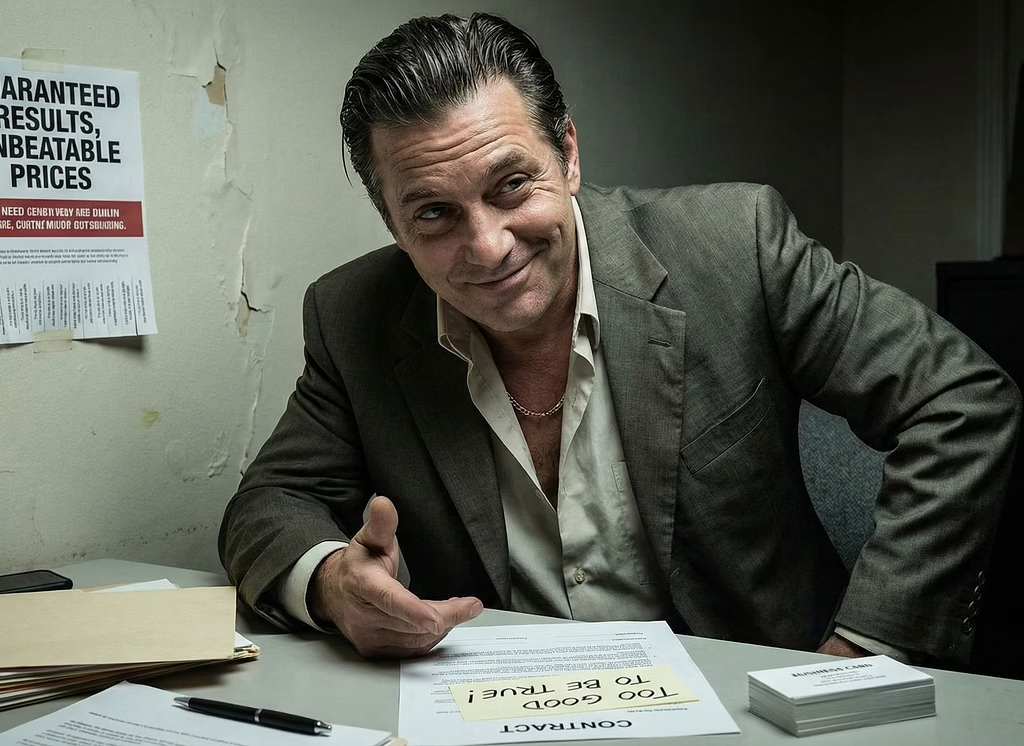

I spent years working with construction companies in New Orleans before I realized something odd about my client vetting process… it didn’t really exist.
In New Orleans, I could ask around. Someone always knew someone who’d worked with a contractor, and the network would tell me who to avoid. The informal vetting system worked because everyone operated within the same geographic and relational sphere.
Then I started working with contractors outside of Louisiana, and that safety net disappeared. I felt like I walked into a dark forest without a flashlight.
When the Network Breaks Down
At first, I tried to recreate the vetting process manually. I’d ask around about contractors who reached out to me, checking references and digging into their reputation. After vetting 8-10 contractors this way and finding they all checked out, I noticed something interesting… I’d stopped needing to vet them at all.
The contractors reaching out to me were self-selecting as ethical operators simply by seeking marketing help in the first place.
These weren’t contractors looking for a quick website refresh or some tactical lead generation. They wanted better relationships with their clients, prospects, and employees. They wanted healthy growth, not money-hungry immediate expansion. Often, they explicitly told me they wanted to distance themselves from shady competitors.
That’s when the pattern became visible.
The Chameleon Business Model
Shady contractors maintain a limited digital footprint because they frequently change company names or relocate. Research shows that 84% of construction industry respondents experienced or observed unethical acts in the past year, with many experiencing them repeatedly.
These operators dislike written documentation because they frequently change what they say. Their services shift from tree cutting to concrete paving depending on what easy money looks like that week. Their pricing morphs based on opportunity. They need to be chameleons, and marketing creates a permanent record that threatens that flexibility.
They prey on low-bid work that doesn’t require strong messaging or quality marketing materials. They never invest time in thought leadership. It’s a turn-and-burn mentality where the business model depends on staying fluid enough to exploit whatever gaps that appear.
How the Bait-and-Switch Actually Works
Here’s the mechanism: shady contractors win contracts with impossibly low bids, then find cheap subcontractors to do the work while hunting for holes in the scope. They create problems to inflate the scope, communicate poorly, and rely on change orders to make their actual profit.
Studies document that contractors colluding with project officials can submit very low bids to win contracts, knowing they’ll recoup profits through promptly approved change orders. The average cost growth for low-bid projects exceeds 12%, compared to just 7.6% for best-value procurement.
This entire business model collapses the moment you introduce transparency.
Why Marketing Threatens the Scam
When ethical contractors publish content that educates clients about scope issues or helps them identify problems upfront, they’re closing the gaps that shady contractors depend on to make money.
Experts identify scope issues before signing a contract. They advise clients instead of preying on them. They build trust through consistent messaging and documented expertise… which means they can’t suddenly claim different capabilities or change their pricing structure when a better opportunity appears.
Marketing creates accountability. It establishes a public record of what you do, how you do it, and what you believe. For ethical contractors, this documentation builds credibility and attracts clients who value transparency.
For shady contractors, it’s a liability they can’t afford.
The Self-Selection Mechanism
Marketing doesn’t just generate leads; it filters them.
When you publish thought leadership that educates clients about common scams, scope manipulation, and red flags in contractor behavior, you’re simultaneously attracting informed clients and repelling the operators who depend on client ignorance.
The contractors who reached out to me understood this instinctively. They knew that content marketing in construction establishes credibility precisely because it requires consistency and transparency… qualities that align with ethical business practices and repel those who can’t afford either.
This is why I eventually stopped manually vetting construction companies that approached me about my marketing services. The act of seeking marketing help had become the vetting process itself.
What This Means for Scaling Beyond Your Network
When you operate within a local network, reputation travels through personal connections. You ask around, someone knows someone, and the vetting happens organically through shared relationships.
When you scale geographically, you lose that informal system. You need a replacement mechanism that creates trust without requiring personal introductions.
Marketing becomes that mechanism… but only if you recognize it as a filtering tool rather than just a lead generation system.
The contractors willing to invest in building a documented presence, educating their market, and establishing transparent expertise are signaling something important about how they operate. They’re comfortable with accountability because their business model doesn’t depend on flexibility, information asymmetry, or scope exploitation.
The ones avoiding marketing? They’re telling you something, too.
When you’re working outside your local network and can’t rely on informal vetting, pay attention to how contractors approach marketing. The absence of a marketing presence isn’t just a missed opportunity… it might be a deliberate strategy to maintain the flexibility that ethical operations can’t afford.